Calibrating the Scenario Engine
This thoughtful article turns a familiar habit – overplanning – into a powerful reflection on self-trust, flexibility, and what it really takes to feel safe in uncertainty. With honesty, clarity, and practical insight, it invites readers to rethink their own “scenario engine” and discover a calmer, more grounded way of moving through change. If you have ever felt exhausted by trying to control every outcome, this is a piece you will want to read to the very end.
5/19/20262 min read
We live in a culture that worships the blueprint. We map our careers, schedule our rest, and script our days, finding a deep sense of comfort in knowing exactly what comes next. Having a plan feels like holding a shield against the unpredictable nature of life.
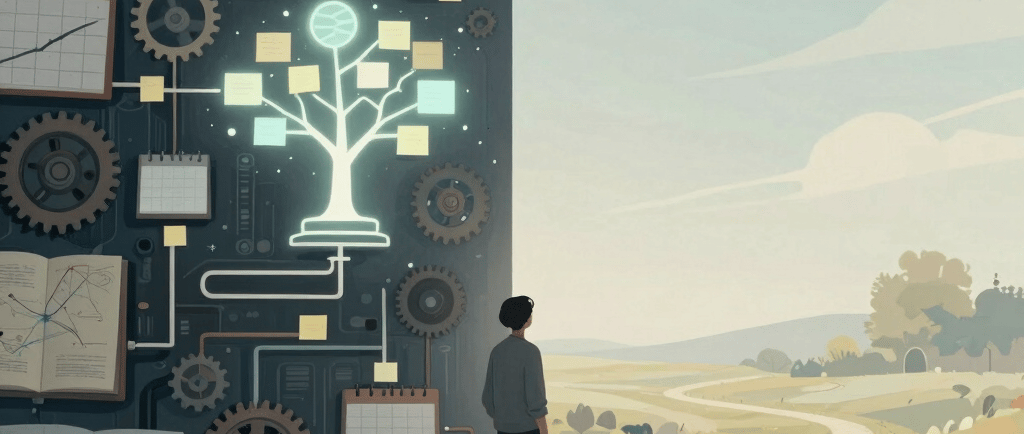
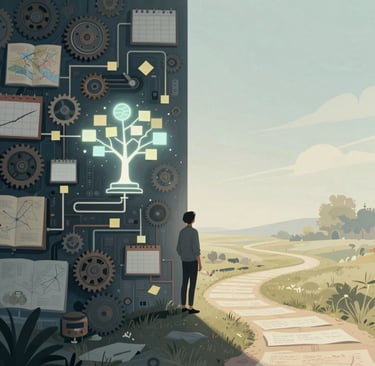
But have you ever noticed the hidden tax that comes with rigid planning? It’s the exhaustion of constantly maintaining the script. When life deviates from the line – as it always does – we immediately fire up our internal "scenario engines," desperately calculating every possible consequence, trying to outsmart the future before it even arrives.
I know this engine intimately. As an analytical mind, it has been my default setting for a very long time.
Lately, I’ve been experimenting with something that feels entirely foreign to my structured nature: spontaneity.
For me, spontaneity doesn't mean recklessly throwing away my calendar. It simply means looking at what happens inside me when a plan suddenly changes, or when no plan exists at all. I started researching my own reactions, asking myself: What does planning actually give me? And why is it so incredibly difficult for me to pivot?
The answer wasn't a lack of flexibility. It was a lack of safety. When a plan fell apart, a wave of insecurity would rush in about the unknown consequences. To cope, my mind would build ten different mental scenarios to fix it. It was effective, but it required a hell amount of energy. It was exhausting.
I realized that true spontaneity isn't about the absence of structure; it’s about the presence of self-trust. It’s the quiet confidence that whatever arrives, I have the capacity to respond to it in the moment. It’s a trust in the bigger picture that nothing comes my way that I cannot manage.
This is my personal journey, and your blueprint will look entirely different. But the architecture of stepping into something new follows a remarkably similar path for all of us. If you are trying to change a deeply ingrained pattern in your life or work, it helps to approach it not as a permanent rewrite, but as a conscious experiment:
Acknowledge the old way: What does your current habit give you? (For me, planning gave me a temporary illusion of safety).
Identify the core need: What do you actually need to do it differently? (I didn't need better time management; I needed deeper self-trust).
Step into the trial: Try the new behavior, knowing it might fail, stagger, or only partially succeed. Failure isn't proof that the new way is wrong, it's just data for the next attempt.
The mindful check-in: Reflect without judgment. What went well? Where did the old habit pull you back? Why?
When we stop overthinking every potential outcome, something remarkable happens. The cognitive noise quietens. We reduce the exhausting burden of making hundreds of decisions for scenarios that will never even happen. We find ourselves dropping out of our heads and into our bodies, connected to our gut, experiencing the present moment fully.
We all carry different stories, different challenges, and different definitions of comfort. Yet, no matter the change we are trying to invite into our lives, the foundational anchors remain the same:
Curiosity to remain open to alternative paths.
Courage to take a single step into the unknown.
Reflection to integrate what we learn along the way.
This week, I invite you to notice your own "scenario engine." The next time a plan changes or an unexpected detour appears, pause before you react.
Can you let the life happen, just for a moment? Can you trust that you are steady enough in your own skin to handle whatever lands in front of you?